The 3 Most Common Issues With Commercial HVAC Systems

There’s nothing worse than a malfunctioning Heating repair patterson,ny during extremely hot or cold days. If you’re in charge of a commercial property, you need to take extra measures to make sure the commercial heating and cooling systems are always in optimal working condition.
Unfortunately, just like many other systems, as the equipment ages, the system can start performing poorly, which is why you need to get it serviced regularly and take care of all kinds of issues as soon as you’ve identified them.

In this article, we’ll take a look at four common commercial HVAC problems so you can take a proactive approach in making sure your system works reliably at all times.

If you’ve started noticing strange and unusual noises coming from your HVAC system and they’re quite loud, there may be an underlying issue that you need to take care of immediately. The first thing you need to do is make sure that loose components, such as access panels or unfastened doors are not the ones causing the rattling noises.
If there’s a screeching sound coming from the system, this can mean that either a fan or some other moving part needs to be lubricated or replaced. Regardless of the source of the noise, you need to get your system checked by a technician before things escalate.

There’s a huge variety of thermostats that exist out there, both programmable and non-programmable. If you feel like the furnace in your commercial HVAC unit isn’t working properly, it could have something to do with how your thermostat is set. Take a look at the owner’s manual to learn all about the operating instructions and avoid having to pay for a costly service call.
Something you need to know about programmable thermostats is that they may contain batteries that need to be replaced periodically. Even after you’ve changed the battery and studied the operating instructions carefully, you may not be able to diagnose the problem. In such cases, it’s always better to consult a service technician.

One of the things you should never forget to do is to replace your clogged or dirty filters regularly. This should be an important element of your preventive maintenance checklist as it can help improve the efficiency and extend the lifespan of your furnace.
Dirty filters will restrict clean air flow and put pressure on your unit to work a lot harder in order to circulate air evenly through the property. It can also cause the furnace to start overheating and shut down once it reaches its limits.

Once you’ve identified the source of all these problems in your HVAC unit, you’ll be able to eliminate major problems and make sure your system stays in good condition for a long period of time. You need to pay special attention to your specific system’s needs in order to improve efficiency and reduce unnecessary energy consumption.
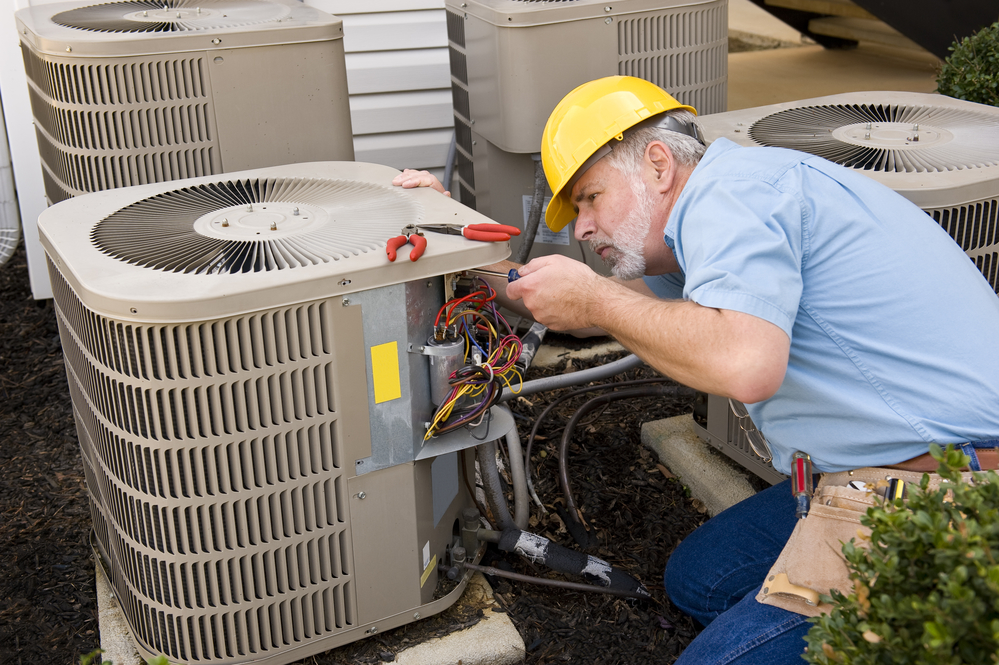
5 Reasons To Decide On New Air Conditioner Installation

There are at least 5 reasons to decide on new air conditioner installation. The life expectancy of a/c units is approximately ten years. If your a/c unit is over eight years old and you’re looking at costly repair bills or exorbitant energy costs, it’s time to consider replacing it. The worst thing to do is wait until it dies. You don’t want to know how uncomfortable the air can be without it.

  1. Energy Efficiency

Modern air conditioning systems can help you to realize up to 60% on your cooling expenses. That’s highly significant when you consider that the greatest part of the energy costs for homes and businesses is for covering cooling costs. Newer models are manufactured with equipment that delivers a minimum SEER (Seasonal Energy Efficiency Rating) of 14. Older units, even those that have only been in use for a decade, have a SEER rating of about 9. Higher numbers mean more energy efficiency and savings.

  1. Warranty

Older air conditioning units typically cost more in maintenance and hvac installation patterson ny. They’ve often outlived their warranties, making it less affordable to replace parts. However, even when there are extended warranties in place, there might not be any replacement parts available. Then what?

You see, R22 Freon is being phased out. All cooling equipment manufactured today uses R410A. The change was driven mostly by environmental concerns. The modern equipment is not at all compatible with the older equipment. You can’t just swap out the older parts for newer parts. Total air conditioner replacement will be the only option. Why wait?

  1. Environmental Friendliness

The move toward eliminating R22 Freon is a step toward helping the environment. The HCFCs in R22 contributes to ozone depletion. The newer R410A coolant has zero ODP (ozone deletion potential).

Smaller equipment now tackles big cooling operations. This translates into less waste material at the end of the unit’s life. Many new air conditioners are modularly designed, allowing the units to be taken apart for easy cleaning, maintenance and servicing. Easier access means less time is required and labor costs are lower.

Because the newer air conditioning units can be disassembled so easily, the units can quickly be prepared for recycling. Nearly 85% of materials on some current a/c units are completely recyclable. Some even have long-life wash-and-reuse filters.

  1. R22 Freon

It’s going to be manufactured in limited quantities until 2020. You can expect supplies to be more in demand and harder to get as time goes on. Then manufacturing will stop and no more will be made. When the last of the R22 Freon supply is gone, it’s gone!

Its predecessor, R12 Freon, skyrocketed to nearly $75 for a pound’s worth as it was being phased out. Do you know that the average a/c system uses 12 pounds or so? Eventually, all air conditioner coolant will be R410A. It’s just not practical to spend a lot of money replacing Freon that’s going to become obsolete. That money can be invested in a new air conditioning unit and be returned through energy savings.

  1. Indoor Air Quality

Air pollution isn’t an outdoor-only problem. Indoor air quality can be compromised by smoke, radon, mold, chemicals and more. Poor indoor air quality has been proven to be a very real and serious health risk. Pollutants are released from building materials, insulation, carpeting, furnishings, cleaning products, etc. Outdoor contributors like vehicle exhaust and industrial plant chemicals find their way indoors.

Design a site like this with WordPress.com
Get started